
Site Preparation for Mountain Construction
Land Grading in Blue Ridge for properties with steep terrain and complex drainage requirements
Mountain footprints in North Georgia demand grading precision that accounts for slope, seasonal runoff, and foundation stability before any structure goes up. G&R Company LLC performs land grading and site preparation for residential construction across Blue Ridge, Mineral Bluff, and Gilmer County, where elevation and terrain turn standard excavation into specialized work. Property owners building on steep lots or replacing older mountain homes rely on grading that creates level building pads while controlling water movement year-round.
The service involves equipment-based grading that shapes the land to support foundation construction, followed by drainage slope design that directs runoff away from the building envelope and prevents erosion during heavy rain or snowmelt. Foundation pad preparation includes compacting fill material and establishing grades that meet structural requirements for mountain builds, where frost depth and soil composition vary significantly across short distances.
Schedule a site evaluation to assess slope, drainage pathways, and foundation pad requirements for your mountain property.
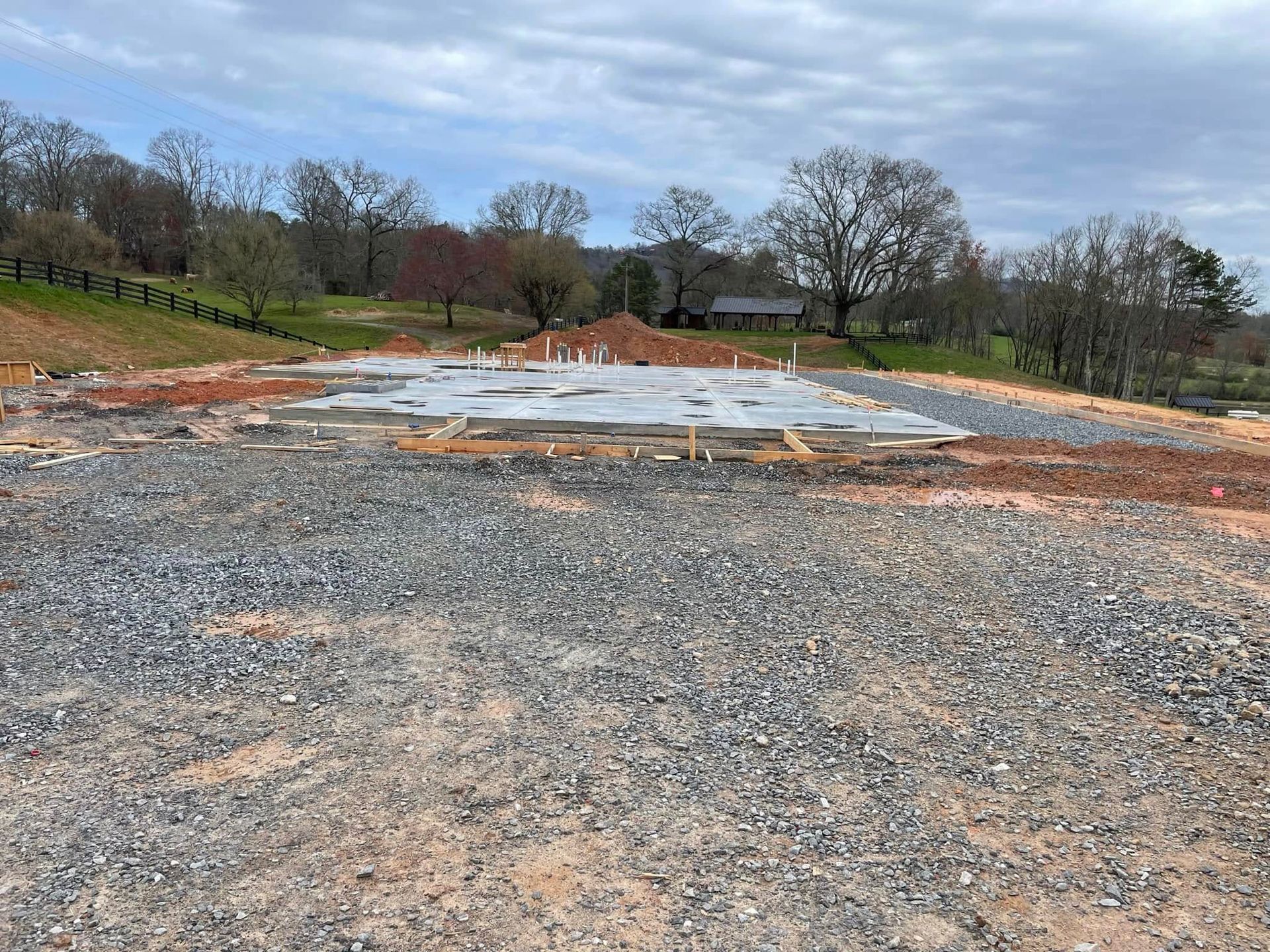
What Proper Grading Accomplishes on Mountain Lots
Grading work begins with clearing vegetation and topsoil, then cutting into slopes or filling low areas to create a stable, level pad that matches the building footprint and foundation design. Equipment operators adjust cut-and-fill ratios based on soil type, bedrock depth, and the degree of slope, while drainage planning maps where water will travel during storms—accounting for uphill watershed and how neighboring properties affect runoff patterns.
Once grading is complete, your property will have a compacted foundation pad that sits level, with perimeter slopes directing water to planned drainage routes rather than pooling near the structure or eroding soil at the foundation edge. You'll see defined high and low points across the site, with swales or graded channels guiding runoff toward retention areas, culverts, or natural drainage paths that handle seasonal flow without washout.
The work also establishes access routes for construction equipment and material delivery, which matters on mountain sites where narrow roads and steep driveways limit staging options. G&R Company coordinates grading with the full excavation-to-build pipeline, so foundation contractors and framers arrive to a site that's ready for the next phase without delays caused by drainage problems or unstable pads.
What to Know Before Grading Your Mountain Site
Mountain construction requires grading decisions that account for terrain, weather, and long-term site performance, and property owners often ask how these factors affect project scope and timing.
What makes mountain grading different from flat-site grading?
Mountain grading involves managing slope stability, directing runoff from uphill watershed areas, and compacting fill on angled surfaces where settling risk is higher. Operators work with natural contours to minimize cut-and-fill volumes while ensuring the building pad remains stable through freeze-thaw cycles and heavy precipitation common in Blue Ridge elevations.
How does seasonal runoff affect grading plans?
Spring snowmelt and summer storms generate concentrated water flow on mountain properties, so grading must direct that volume away from foundations and prevent erosion along slopes. Drainage design accounts for peak flow rates and soil saturation levels that occur during wet seasons, using swales, berms, or retention features to control water movement without overwhelming natural drainage paths.
When should grading happen relative to other construction phases?
Grading typically occurs after site clearing and before foundation excavation, giving the pad time to settle if weather allows. Timing around North Georgia rain patterns matters, since heavy storms during active grading can cause washouts or require rework, and frozen ground in winter limits compaction effectiveness.
What happens if bedrock is encountered during grading?
Shallow bedrock requires adjustments to cut depth or additional blasting and removal work, which changes both timeline and cost. Site evaluation before grading begins helps identify likely bedrock zones based on surrounding topography and soil surveys, though exact depth often isn't confirmed until equipment starts cutting.
How is drainage slope designed for mountain properties?
Slope design calculates the percentage of grade needed to move water efficiently without causing erosion, typically aiming for 2 to 5 percent away from structures. Steeper natural slopes require terracing, retaining walls, or stepped grading to create functional outdoor areas while maintaining drainage control across elevation changes.
G&R Company LLC applies 25 years of North Georgia mountain construction experience to land grading projects that prepare steep, complex sites for residential builds. Request an on-site consultation to review terrain conditions, drainage requirements, and foundation pad specifications for your project.