
Foundation Prep for High-Country Builds
Excavation in Blue Ridge for residential and commercial projects on mountain terrain
Freeze-thaw cycles and elevation-specific soil conditions in the North Georgia mountains require excavation work that goes deeper and accounts for seasonal ground movement that doesn't affect lowland construction. G&R Company LLC handles excavation for custom homes, additions, and commercial projects across Blue Ridge, Mineral Bluff, and Blairsville, where foundation preparation involves more than digging—it requires understanding how mountain weather and terrain affect long-term structural stability. Site readiness before framing depends on excavation that creates level foundation footprints and manages drainage from the start.
The process includes site preparation that removes vegetation and topsoil, followed by precise grading to establish foundation elevations and perimeter drainage slopes. Foundation excavation cuts trenches or pads to depths that reach below frost lines and stable soil layers, with attention to bedrock proximity and groundwater patterns common in mountain geology. Each phase coordinates with custom home timelines, ensuring contractors arrive to a prepared site rather than waiting for excavation adjustments mid-build.
Arrange a property assessment to identify excavation depth, drainage planning needs, and site access considerations for your build.
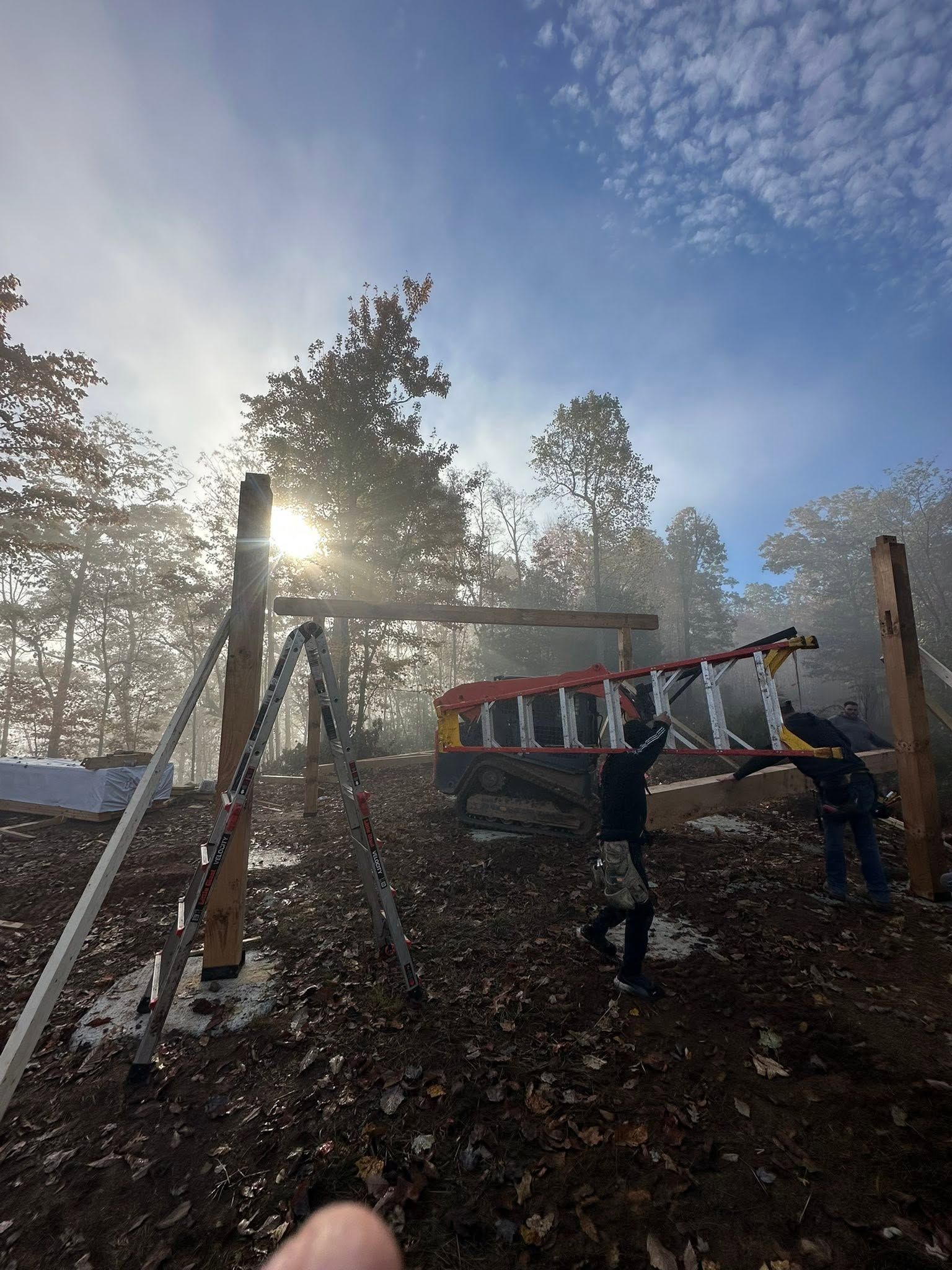
How Excavation Addresses Mountain Site Challenges
Excavation on mountain properties begins with establishing access routes for heavy equipment, which often means widening driveways or creating temporary paths on slopes where standard machinery can't safely operate. Operators then strip topsoil and organic material to reach load-bearing soil or bedrock, measuring cut depths against foundation plans and adjusting for elevation changes across the footprint. Trenching for footings follows engineered specifications that account for frost depth—typically deeper in high-country areas where ground freezes more consistently than in Georgia's lower elevations.
After excavation finishes, your site will have level, compacted foundation trenches or pads that match structural drawings, with perimeter slopes directing water away from the foundation zone before concrete is poured. You'll notice clean, squared edges where footings will sit, and graded paths that allow concrete trucks and material deliveries to reach the work area without churning up surrounding soil or creating new drainage problems.
The work also reveals subsurface conditions—bedrock depth, groundwater seepage, or unexpected soil layers—that sometimes require design adjustments or additional drainage installation. G&R Company coordinates these findings with engineers and builders early, so foundation plans adapt before framing schedules are affected.
Questions Property Owners Ask About Mountain Excavation
Excavation on steep or remote mountain properties introduces variables that differ from flat-site work, and clients often want clarity on how terrain and weather affect the process.
What does site preparation include before excavation starts?
Site prep involves clearing trees, brush, and topsoil from the building footprint and access routes, then staking foundation corners based on survey markers. Equipment operators establish rough grades that allow machinery to move safely across slopes and position spoil piles where they won't interfere with drainage or construction staging.
How deep does foundation excavation need to go in Blue Ridge?
Frost depth in North Georgia mountains typically requires footings at least 12 to 18 inches below grade, though steep sites or poor soil may demand deeper cuts to reach stable bearing layers. Exact depth depends on soil testing, foundation design, and whether the site involves fill material or native bedrock.
Why does mountain terrain affect excavation costs?
Steep slopes limit equipment maneuverability and slow production rates, while rocky soil or shallow bedrock requires heavier machinery or additional breaking work. Access challenges—narrow roads, limited staging areas, or long hauls to dump sites—add time and fuel costs compared to accessible flat lots.
When is the best time to schedule excavation in North Georgia?
Late spring through early fall offers the most predictable weather and ground conditions, with soil that's workable but not saturated. Winter excavation is possible but slower, since frozen ground is harder to cut and compaction effectiveness drops, while summer storms can flood open trenches and require pumping or regrading.
How is drainage managed during excavation?
Excavators grade the site to direct runoff away from open trenches and foundation zones, often installing temporary berms or swales that control water until permanent drainage systems are in place. Pump systems remove standing water from footings after rain, preventing soil saturation that could compromise compaction or delay concrete pours.
G&R Company LLC manages excavation as part of a family-owned operation with 25 years of experience coordinating site prep, foundation work, and construction phasing for mountain builds. Contact the office at (678) 492-6258 to discuss excavation scope, timeline, and site-specific requirements for your North Georgia project.